

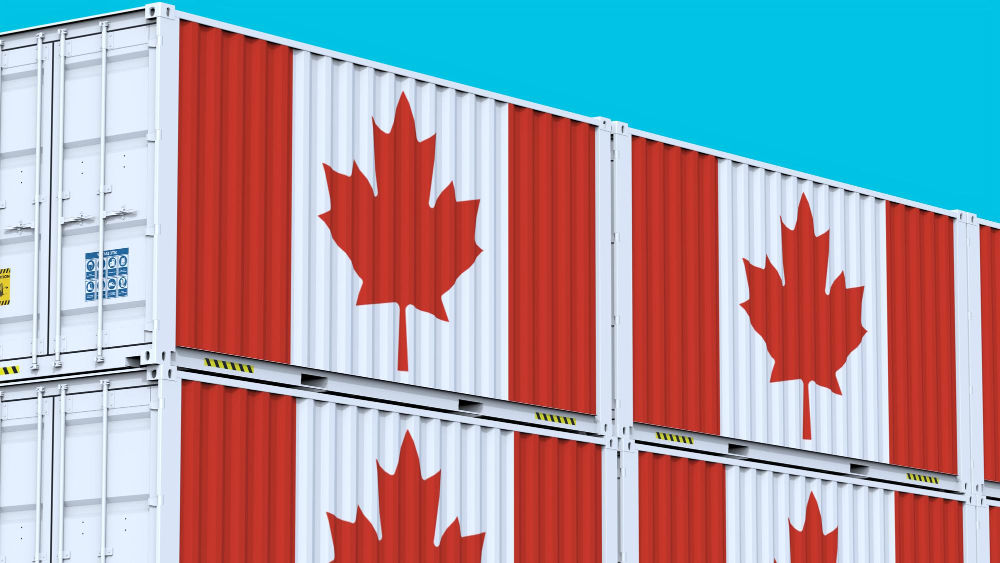
How a Canadian Distributor Helps Brands Reach Markets They Can't Reach Alone
Your Products Belong in More Hands. Your Distribution Model Is the Bottleneck.
Most manufacturers in Canada know their products belong in more hands. The demand is there. The retailers exist. But somewhere between "we'd love to sell your product" and an actual purchase order, things fall apart.
The reseller is too small. The order doesn't meet minimums. The region is outside your sales team's reach. The onboarding process takes weeks, and by then, the reseller has moved on to a competitor who made it easier.
This is the gap that kills growth for Canadian brands — not a lack of product quality or market interest, but the friction between a manufacturer and the long tail of resellers who actually move product to end customers.

The long tail is where the growth is
When most brands think about distribution, they think about their top 10 or 20 accounts. The large retailers, the buying groups, the established chains. And those accounts matter. But they're also saturated. Every competitor is fighting for shelf space in the same places.
Meanwhile, there's an entire ecosystem of smaller resellers that brands either can't reach or choose not to serve: independent e-commerce sellers, service businesses that could bundle products with their offerings, campus stores, regional retailers, and brick-and-mortar shops in communities your sales team will never visit.
These aren't hobbyists. Many of them generate between $100,000 and $500,000 in annual sales. They're just not big enough to meet a manufacturer's minimum order requirements, and they don't have the purchasing infrastructure to open direct accounts with dozens of brands.
That's not a problem with the reseller. That's a problem with how distribution has traditionally worked.
What "markets you can't reach alone" actually looks like
Consider a technology services company in suburban Ontario. They install networks, manage IT infrastructure, and maintain client relationships with schools, clinics, and small offices. They already visit these locations regularly. They already have purchasing trust.
Now imagine that company can add TP-Link routers, security cameras, and smart home devices to their service offerings — ordered one unit at a time, shipped from a Canadian warehouse, without opening a single manufacturer account. The products show up. The margin is built in. The customer never knows the difference.
That's a market most manufacturers would never reach on their own. Not because the demand doesn't exist, but because the path to that sale doesn't fit inside a traditional distribution model that requires $2,000 minimum orders and a formal dealer application.
Multiply that by thousands of similar businesses across Canada — IT consultants, office supply resellers, facility managers, printing companies, educational suppliers — and you start to see the scale of what's being left on the table.
Why brands resist (and why it costs them)
Manufacturers often push back on this model for understandable reasons. They want to protect their brand. They want to control who sells their products and how. They worry about unauthorized sellers undercutting prices on Amazon or misrepresenting the product.
These are legitimate concerns. But the solution isn't to restrict access so tightly that only a handful of large accounts can carry your products. The solution is authorized distribution with guardrails.
When a brand works with a distributor that manages reseller qualification, enforces marketplace authorization, and maintains pricing transparency, the result isn't a loss of control. It's an expansion of reach with the controls still intact.
Take marketplace authorization as an example. A brand might have products that are restricted on Amazon — meaning sellers can't list them without explicit approval. Through an authorized distributor, a qualified reseller can gain that approval, sell on the platform under the brand's terms, and drive revenue that wouldn't have existed otherwise. The brand maintains control over who sells. The reseller gets access they couldn't get on their own. The distributor bridges the gap.

The math on no-MOQ distribution
The traditional objection is straightforward: "We can't afford to process small orders." And for a manufacturer handling logistics in-house, that's often true. The cost of picking, packing, and shipping a single unit to a small reseller doesn't justify the margin.
But that's exactly what a distributor absorbs. When a distributor holds Canadian inventory across multiple warehouses — Edmonton, Montreal, Toronto, Vancouver — and allows resellers to mix products from dozens of manufacturers in a single cart with no minimums, the economics shift.
The manufacturer ships in bulk to the distributor. The distributor handles the fragmentation. The reseller orders what they need, when they need it. The brand gets incremental revenue from markets that were previously invisible to them, without adding a single line item to their logistics overhead.
For the reseller, no minimums mean they can test a product line without risking thousands of dollars in unsold inventory. If it works, they reorder. If it doesn't, they've lost nothing. That risk-free entry point is what converts a curious reseller into a repeat buyer — and it's a conversion path that doesn't exist when the barrier to entry is a $5,000 opening order.
What this looks like in practice
A printing supplies reseller in Quebec starts with toner cartridges from one manufacturer. They add inkjet supplies from another. Then label printers. Then receipt paper. Within months, they're sourcing from five or six brands through a single platform, building a product catalog that serves their local market without managing five or six separate supplier relationships.
A weed supply wholesaler in Ontario — yes, that's a real category — discovers they can add facility cleaning products, first aid kits, and lighting to their catalog. Their customers already need those things. The products are already in a Canadian warehouse. The integration is already built.
A tech consultant adds Sharp electronics to their website. Not because they wanted to become a retailer, but because their clients kept asking where to buy the products they recommended. Now they earn margin on hardware they were already specifying.
None of these resellers fit the profile of a traditional dealer. None of them would have passed a manufacturer's standard account application. And all of them are generating real revenue for the brands they carry.
The distributor's role is changing
Distribution used to be about logistics — moving boxes from point A to point B. That's still part of it, but it's no longer enough.
The brands that will grow in the Canadian market over the next five years are the ones that figure out how to reach the resellers they've been ignoring. Not by lowering their standards, but by working with distribution partners who can qualify, onboard, and support those resellers at scale.
That means transparent pricing so resellers can calculate margin before they buy. It means mixed-brand ordering so a small shop doesn't need to hit minimums with every manufacturer. It means marketplace authorization so resellers can sell on the platforms where their customers already shop. And increasingly, it means AI-powered tools that help resellers identify which products to carry, what margins to expect, and how to build a catalog that actually sells.
The brands that treat distribution as a bottleneck will keep selling to the same accounts they've always sold to. The brands that treat it as a growth channel will find customers they didn't know existed.
The opportunity is already there. The question is whether you're set up to capture it.
If your products are sitting in a Canadian warehouse but only reaching a fraction of the resellers who could sell them, the issue isn't demand. It's access. And access is a distribution problem with a distribution solution.
Randmar connects manufacturers with resellers across Canada through one platform — no minimums, mixed-brand carts, transparent pricing, and AI-powered sourcing tools. Learn more at randmar.io.