

Inside Randmar's Quality Control Process — How We Vet Every Brand
Inside Randmar's Quality Control Process: How We Vet Every Brand Before It Reaches Resellers
When you source from a distributor, you're not just buying products — you're borrowing their judgment. Every brand they list is a bet they're asking you to back with your cash, your customers, and your reputation. That's why at Randmar, vetting isn't a checkbox. It's a process.
Canadian resellers deal with enough uncertainty: shifting tariffs, shipping delays, marketplace policy changes. The last thing any purchasing officer needs is a product that arrives broken, underperforms on reviews, or disappears from its supplier's catalog three months in. So here's a look behind the curtain at how we decide which brands earn a spot on Randmar.io — and which ones don't.
1. Brand Due Diligence: Who Are We Really Working With?
Before we ever talk pricing or sample a single SKU, we vet the brand itself. That means checking corporate registration, reviewing trade history, and confirming the brand owns the IP it's selling. We look for patterns: Has the brand had product recalls? Are their online reviews stable or volatile? Do they have consistent supply from their own manufacturer, or are they middlemen themselves?
We also look at longevity and roadmap. A brand that can't tell us what's coming next quarter is a brand that can't help our resellers plan inventory. For Canadian resellers specifically, we confirm that brands are prepared for Canadian compliance requirements — CSA, Health Canada where relevant, and bilingual labeling when needed.
2. Product Sampling and Hands-On Testing
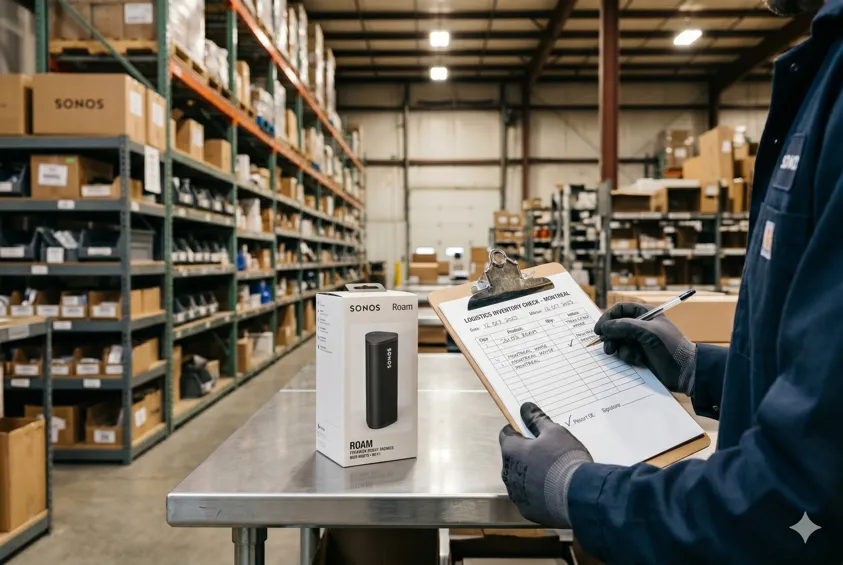
Once a brand passes paperwork, the product has to pass our hands. Every SKU we consider gets sampled and tested at our Montreal warehouse before we list it. For audio products like Sharp earbuds and speakers, that means battery life checks, pairing stability, and sound quality against category benchmarks. For drinkware like Contigo, that means leak tests, temperature retention, and lid durability. For Rakabot storage and furniture, we verify build quality, hardware completeness, and assembly instructions.
We're not looking for perfection — we're looking for honesty between the spec sheet and the real product. If a brand's packaging claims "24-hour cold retention" and we measure 9 hours, that brand doesn't move forward. Our resellers quote those specs to their customers. We owe them accuracy.
3. Supply Chain and Inventory Stability
A great product that ships once and disappears is useless to a reseller trying to build a repeatable listing. So we dig into the brand's supply chain: Where are they manufactured? What's the lead time? How deep is their safety stock? Can they handle a sudden 3x increase in volume if a product goes viral on TikTok?
We also look at the commercial terms. Brands that demand exclusivity, lock-in contracts, or minimum purchase commitments from our resellers don't fit the Randmar model. Our whole value proposition — no MOQs, no contracts, no monthly fees — depends on bringing in brands that are comfortable working flexibly.
4. Margin Integrity and Price Protection
We won't list a brand whose pricing structure would force our resellers to lose money. That means we model the full stack — landed cost, Randmar wholesale price, suggested MSRP, marketplace fees, shipping — and ask: can a reseller realistically make margin on this product across multiple channels?
For reference, our Sharp Earclip earbuds can deliver up to 67% margin for resellers, and Rakabot furniture lines land at up to 23% — both numbers we can defend because we pressure-tested the math before the brand ever went live. We also require brands to agree to basic MAP (minimum advertised price) discipline, so the reseller who does the work of building a quality listing doesn't get undercut by a race-to-the-bottom seller 48 hours later.
5. Post-Launch Monitoring: Vetting Never Really Ends
Getting onto Randmar isn't the finish line. We track defect rates, return reasons, marketplace complaints, and reseller feedback on every active brand. If a product starts trending toward a 2%+ defect rate, or we see repeat complaints about a specific batch, we pause new orders and talk to the brand before our resellers feel it.
Brands that can't course-correct get delisted. Quietly, but decisively. Because every SKU on Randmar.io is a promise to a reseller — and keeping that promise means being willing to remove a product even after it's selling.
The Bottom Line for Canadian Resellers
Distribution only works when the distributor is doing the hard work that resellers don't have time to do themselves. You shouldn't have to audit a factory in Shenzhen, translate a compliance certificate, or sample a leaky water bottle to find out it leaks. That's our job. When a product shows up in the Randmar catalog, it's already been through every one of the steps above.
That's the whole point of working with a distributor instead of going direct to ten different brands. You get one relationship, one invoice, one point of accountability — and a curated list of brands that have already passed the test.
Ready to source from a catalog that's already been vetted? Create a free account at Randmar.io — no minimums, no contracts, no monthly fees. Browse the brands your competitors wish they had access to.