
Most international brands we consider bringing to Canada start with the wrong packaging.
Not broken. Just not ready for Canada.
From my desk today
Onboarding a new international brand is one of my favourite parts of the job.
It's also where I see the same problem again and again.
Most of the brands we bring into Canada show up with packaging that is either non-compliant, or culturally wrong for the Canadian market. Sometimes both.
And the brand is usually surprised. The product sells well in the U.S. or in Europe. Why wouldn't it sell here?
Because selling products in Canada is more complex than it looks. Especially if you want to sell in Quebec.
The retailer reality
There are two layers of rules.
The federal layer is fairly simple. Under the Consumer Packaging and Labelling Act, key information, like the product's identity and its net quantity, generally has to appear in both English and French on prepackaged non-food consumer products.
The Quebec layer is stricter. Under the Charter of the French Language, the general rule is that everything written on a product, its packaging, its manual and its warranty has to be in French, and no other language can be more prominent or easier to access.
Those rules were already strict. Then Bill 96 tightened them further, and the changes to trademarks on products took effect on June 1, 2025.
Why does that matter if you don't even have a store in Quebec?
- Quebec is about 22% of Canada's population, roughly 9 million people.
- More and more retailers are national chains, with stores and websites that serve Quebec too.
- In my experience, most national chains won't onboard a product or a brand that can't qualify in Quebec.
Sources: Institut de la statistique du Québec, population estimate as of January 1, 2026; Competition Bureau Canada product labelling guidance.
So a product that can't sell in Quebec often can't sell nationally at all.
Behind the scenes at Randmar
Here are 5 things I check, or ask brands to check, before a product goes anywhere near a Quebec shelf.
1. Every word on the product, in French.
The packaging, the inserts, the manual and the warranty all count. French has to be there, and no other language can be more prominent. Safety information always has to be in French.
2. Your trademark can stay. Your description can't.
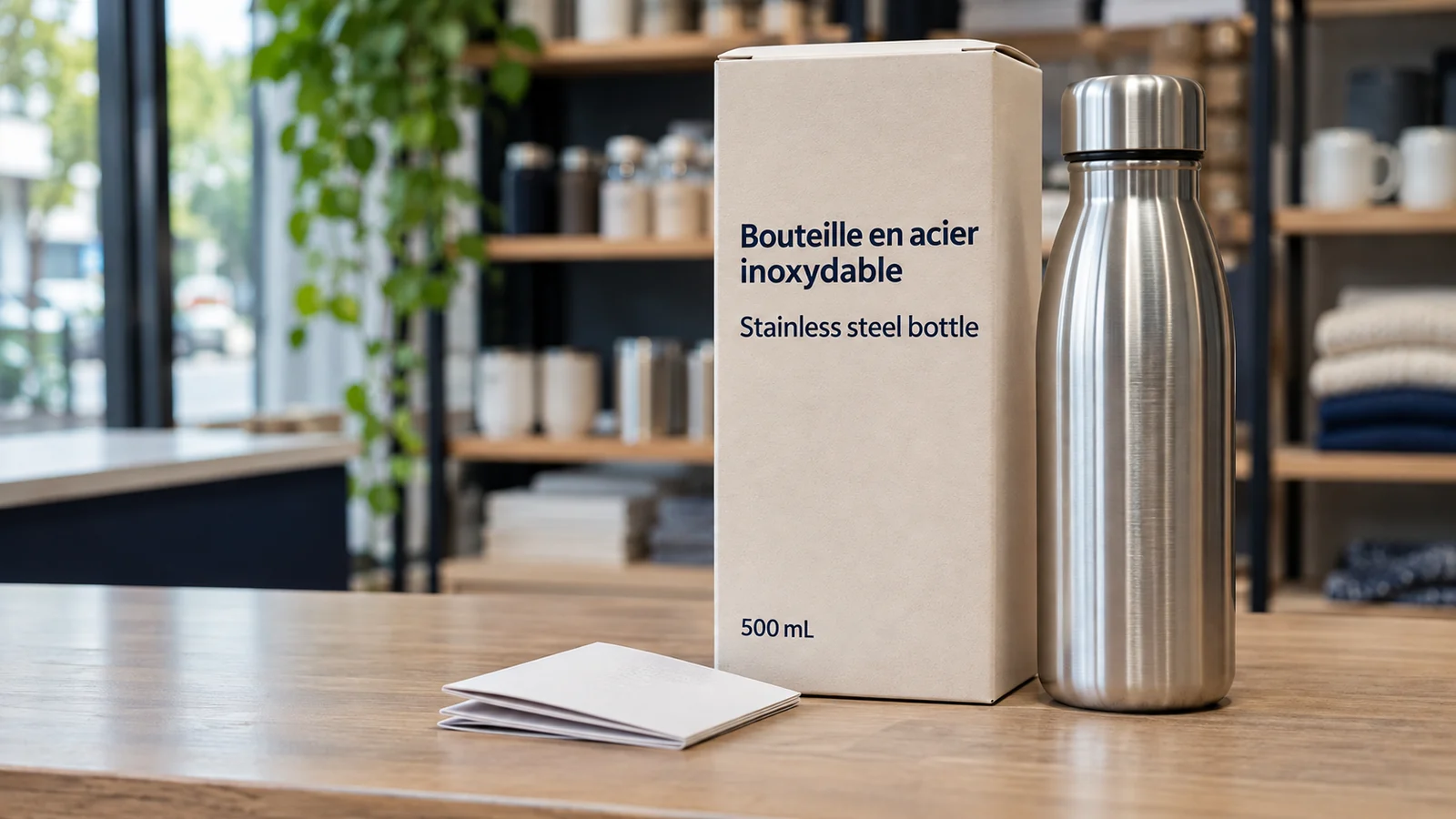
A recognized trademark in another language can stay as is, as long as no French version of it is registered. But the generic terms and descriptions that come with it, like "wireless speaker" or "stainless steel water bottle," have to appear in French.
There's a transition period until June 1, 2027 for certain products with untranslated generic or descriptive terms in a trademark. This can cover products made before June 1, 2025, and some products made later in 2025 under specific federal food-labelling rules. Check the OQLF's transition conditions before relying on the deadline.
3. The federal basics, in both languages.
The product's identity and its net quantity must be in English and French. When the quantity is declared by weight or volume, use metric units. A number and a metric symbol, such as "500 mL," count as bilingual. A U.S. box that only says "16 oz" isn't ready for Canada.
4. Quebec French, not France French.
This one surprises a lot of brands. The French spoken in Quebec and the French spoken in France can be wildly different. A Quebec shopper says "cellulaire," not "portable." "Magasiner," not "faire du shopping." "Fin de semaine," not "week-end."
A listing written in France French reads like it wasn't made for them. Because it wasn't.
5. Culturally right, not just translated.
Compliance gets you on the shelf. Packaging that feels right to Canadian shoppers is what gets you off it.
What we do at Randmar
- At onboarding, we check the French content on packaging, manuals and warranties.
- For online listings, we can provide Canadian French product titles and descriptions, written for Quebec shoppers.
| What's on the product | Federal rule (all of Canada) | Quebec rule |
|---|---|---|
| Product name and identity | English and French | French, and no other language more prominent |
| Net quantity | English and French, in metric where applicable | French, in metric where applicable |
| Company name and address | English or French | The business name can stay as is |
| Descriptions and generic terms | Varies by product | French, even next to an English trademark |
| Manuals, warranties, inserts | Varies by product | French |
| Safety information | Varies by product | Always French |
This checklist summarizes general rules. Exceptions and product-specific requirements can apply, and the common name that identifies a product is distinct from its trademark.
Sources: Competition Bureau Canada, Consumer Packaging and Labelling Act guidance; Charter of the French Language, as amended by Bill 96, and the OQLF's guidance on the June 1, 2025 changes. This is practical guidance, not legal advice: check your specific case with the Office québécois de la langue française or a lawyer.
What it means for you: if a product isn't Quebec-ready, it isn't national-chain-ready. Check it before you commit to the inventory.
My real point
In Canada, "bilingual" isn't a box you tick at the end.
If your product can't qualify in Quebec, it probably can't qualify with a national chain either.
Your quick win this week
Pull your five best-selling imported products and check the boxes against the list above. Anything with English-only descriptions, a manual in English only or a net quantity in ounces only goes on your fix list.
Your turn
Have you ever had a product held back because the packaging wasn't ready for Quebec?