
It's November. Your holiday season hasn't even peaked.
And the big retailers are already reviewing what they'll sell next spring.

From my desk today
Lately, my calendar is filling up with meetings about 2027.
Assortments. Planograms. Which brands stay, which ones go, which new products get a shot.
For large retailers, this is business as usual. We're well into their normal planning calendar.
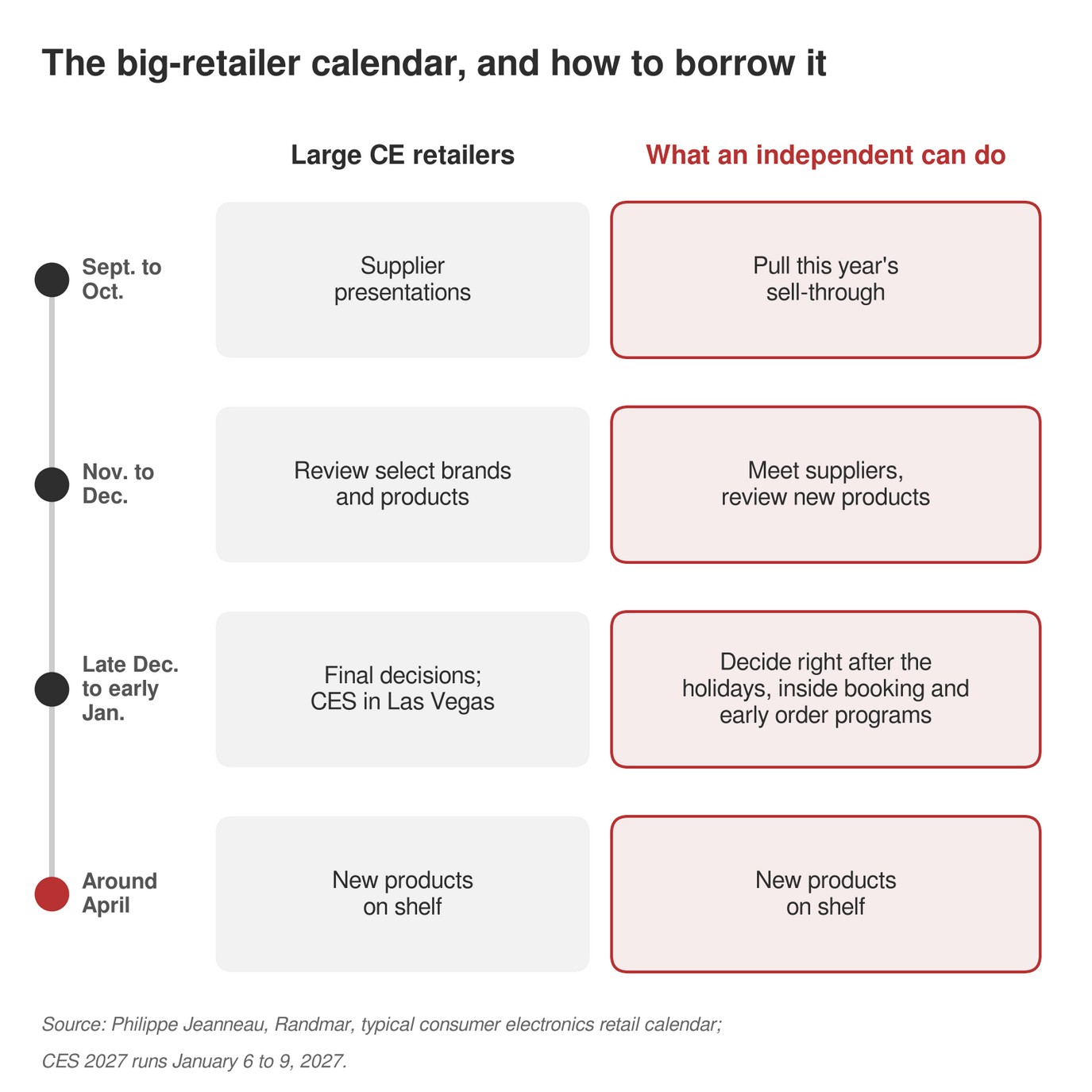
Take consumer electronics retailers as an example. Here's what their year typically looks like:
- September to October: they expect product and business presentations from suppliers.
- November to December: they review select brands and products.
- Late December to early January: final decisions.
- Around April: the new products hit the shelves.
And right in the middle of it, in early January, the largest consumer electronics trade show in the world takes place: CES, in Las Vegas.
For anyone new to retail, that timeline can be a surprise. Next spring's shelf is being decided before this holiday season is even over.
The retailer reality
This post isn't for the largest retailers. They already live by that calendar.
It's for independents and smaller retailers.
From this group, I always hear the same thing: it's hard to compete with the big chains. It feels like the tail is wagging the dog.
I get it. Running a smaller business is hard. Bandwidth is limited. The same few people buy, sell, merchandise, answer the phone and do the books.
So planning for next year usually happens when there's finally time. Which, for most, means sometime in January, after the holiday rush.
By then, the big chains have made their calls. And a good part of the year's best deals may already be behind you.
Behind the scenes at Randmar
My usual comment to independents is simple: mimic the big retailers' calendar.
Not their size. Their timing.
Plan your next year early, well before the holiday season. You can keep the final decision for just after the holidays. But do the work before.
Here's what that can look like for a smaller retailer.
Start with this year's sell-through.
A line review is a process to evaluate new brands, new collections and new products. But you can't judge what's new without knowing what worked. What sold, what sat, and what customers asked for that you didn't have. That's your starting point.
Meet your suppliers before the holidays.
Planning early gives you time to meet all your suppliers, see all the new products and think through your next year. In January, everyone is rushing. In November, you can take your time.
Decide right after the holidays.
The holiday season gives you your final read on what sells. Use it, then decide.
Line your orders up with the programs.
Booking programs and early order rebates reward retailers who commit early. If you decide late, you may miss them. Plan your decisions to land inside those windows.
"But how can I decide before the holidays?"
This is the question I hear most from retailers:
"How can I possibly decide next year before the peak holiday season has happened, especially if I have slower-moving items in my inventory?"
My answer: grab the bull by the horns.
You're reviewing your sell-through early, before Black Friday. That's an advantage. You already know which products are slow. So plan to move that stock aggressively during the holidays, while shoppers are in buying mode.
But don't do it alone.
Reach out to your suppliers for rebate and promotion support. And bring it into your line review conversation: "Here's what's slow. Help me move it, and let's talk about what replaces it."
At Randmar, we make this easy. We do a good portion of that promotion work for retailers. And through the Randmar platform, you can reach out to all the manufacturers we carry.
One meeting, many collections.
Here's where we can make it easier.
For a smaller retailer, meeting every supplier one by one takes weeks you don't have. With Randmar, you have one stop for several collections: about 80 brands and over 20,000 products across stationery, office products, electronics and more.
One meeting can cover a lot of ground at once. Your sell-through, new brands worth testing, new products from the brands you already carry, and the manufacturer rebates and opportunities waiting in your Randmar account.
That's how a small team gets big-retailer planning done, without big-retailer staff.
My real point
You can't match the big retailers' size.
But you can match their calendar. Plan before the holidays, decide right after, and order inside the programs.
Your quick win this week
Block two hours before December to pull your 2026 sell-through: your top sellers, your slow movers, and the products customers asked for that you didn't carry. Then book your supplier meetings before the holiday rush.
Your turn
When do you plan your next year: before the holidays, or after?